If you’ve ever found yourself thinking, “Why does my body suddenly feel different… and no one warned me about this?” you are absolutely not alone. Today’s episode is one I wish every mom could hear before she hits her late 30s and 40s, because we are talking about perimenopause in a way that actually makes sense.
I’m joined by Cynthia Thurlow, a nurse practitioner and expert in perimenopause and menopause, and this conversation truly feels like a mini masterclass in understanding your body. We talk through what is really going on with your hormones, how your gut plays a much bigger role than you might expect, and why so many of the symptoms we tend to brush off are actually connected.
Here’s what I love most about this episode: It is not about fear. It is about awareness. When you understand what is happening in your body, you can start making choices that help you feel better, not just get through this phase, but actually feel strong and supported in it.
In this episode, we cover:
- What the gut microbiome is and why it affects nearly every system in your body
- Why perimenopause can start earlier than you might expect, sometimes in your 30s
- The first hormone to shift and how it impacts stress, sleep, and mood
- How estrogen changes can lead to symptoms like weight gain, heavy periods, and gut issues
- Why your menstrual cycle is a vital sign you should not ignore
- The connection between hormones and brain fog, anxiety, and mood changes
- Why perimenopause can feel chaotic and how to start understanding those changes
- How learning what is happening in your body gives you more options to feel like yourself again
Love the Handbook?
Find all the episodes of the Healthy Parenting Handbook here, or listen on your favorite podcast player:





Don’t forget to leave us a review on Apple Podcasts too! Thank you!
Can't see the video? Watch on YouTube →
YouTube Shorts for This Episode
Turn expert advice into a handbook you can actually use.
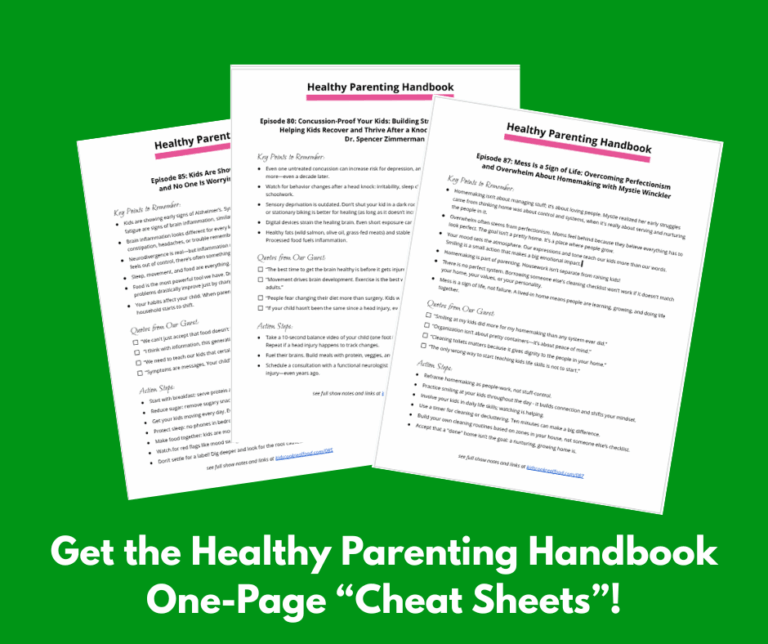
I’ve interviewed hundreds of incredible experts on the Healthy Parenting Handbook podcast! Out of time to listen? You can skim on your phone!
These one-page summaries give you the highlights of every episode fast, so you can find what you need when you need it (and nothing to download).
100% privacy – You’ll also get Katie’s email newsletter with more practical tools for raising capable, confident kids. Change your preferences easily any time.
Key Takeaways about Hormone Changes in Perimenopause
- The gut microbiome (trillions of bacteria and organisms in your body) acts as a control center, influencing your brain, hormones, immune system, bones, and more—not just digestion.
- Perimenopause is a full-body transition, not just about losing fertility. Hormone shifts affect mood, sleep, metabolism, gut health, and brain function all at once. Hear more about perimenopause in one of our most popular episodes with Jenn Pike.
- Progesterone is usually the first hormone to drop, which can make you feel more anxious, less resilient to stress, and more prone to sleep struggles.
- Estrogen fluctuations can create a ripple effect, leading to symptoms like heavy periods, breast tenderness, constipation, and weight loss resistance.
Your menstrual cycle is a vital sign, just like blood pressure or temperature. – Cynthia Thurlow
- Your menstrual cycle is a vital sign. If it disappears for long periods (especially in younger women), it’s a signal to get checked out.
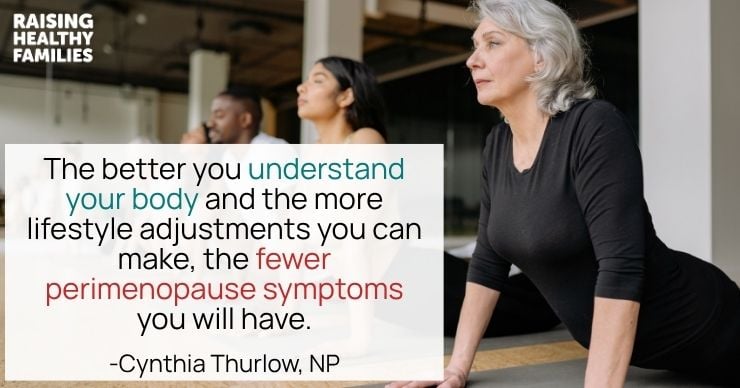
- Understanding your body and noticing patterns gives you more control. Lifestyle changes and (in some cases) hormone therapy can make this transition much smoother.
Keep the Life Skills Going All Year Round!

Missing #LifeSkillsNow? You can keep doing workshops! Get one from each season of #LifeSkillsNow for free to do while you’re waiting for the next season.
These workshops include Making Homemade Gellies with Leah; Turning Big Ideas Into a Real Business with Billy Brady, the CEO of Troomi Phones; How to Make a Phone Call with Katie and kids; Checking Fluid Levels in Your Auto with Sam Tillema; and Making Your Home Sensory Smart with Greg Santucci.
And if you missed this year’s camp, it’s a fun taste of what we do each year in our free life skills camp for kids and teens.
Show Me the Life Skills!Action Steps for This Episode
- Start tracking your cycle and symptoms so you can recognize patterns, especially changes in mood, sleep, or energy.
- If something feels off (like missing periods, major mood shifts, or sudden health changes), consider hormones as a possible root cause.
Perimenopause is often the storm before the calm. – Cynthia Thurlow
- Support your gut with simple habits like eating whole foods, getting enough fiber and protein, and reducing processed foods.
- Prioritize stress management. Your body is less resilient to stress during this phase, so sleep, rest, and boundaries matter more than ever. Take my Stress Mastery Challenge as a great first step!
- Pay attention to patterns instead of isolated symptoms; many issues are connected through hormone changes.
- Find a provider who understands perimenopause so you can have an informed conversation about your options, including hormone therapy.
Resources We Mention for Hormone Changes in Perimenopause
- Get Cynthia’s books: The Menopause Gut: Balance Your Microbiome to Reclaim Your Health in Midlife and Beyond (Amazon/Bookshop.org) and Intermittent Fasting Transformation: The 45-Day Program for Women to Lose Stubborn Weight, Improve Hormonal Health, and Slow Aging (Amazon/Bookshop.org).
- Perimenopause May Be the Wisest and Best Years of Your Life – How to Make That Reality with Jenn Pike
- Hope for heavy periods: 5 root cause solutions that might surprise you
- 9 ways to start healing your gut right away
- Stress Mastery Challenge for busy moms
- Get some natural support for perimenopause and menopause from Berkeley Life’s supplement

Cynthia Thurlow is a nurse practitioner, host of the Everyday Wellness podcast, author and international speaker, with over 15 million views for her second TEDx talk (Intermittent Fasting: Transformational Technique). With over 25 years of experience in health and wellness, Cynthia is a globally recognized expert in perimenopause/menopause and intermittent fasting, and has been featured on ABC, FOX5, KTLA, CW, Medium, Entrepreneur, and The Megyn Kelly Show. Her mission is to help empower women to live their most optimal lives in perimenopause and beyond.

Leave a Comment